Tien Shan Chi Kung: Internal and External Chi Kung ~ Nei Kung versus Chi Kung
Master Steve Gray’s insights into Tien Shan Chi Kung reveal the profound differences between two types of energy cultivation: internal chi kung (nei kung) and external chi kung. His deep understanding of these practices sheds light on how they contribute to physical health, spiritual growth, and the cultivation of chi power.
Internal vs. External Chi Kung
According to Master Gray, Tien Shan Chi Kung belongs to the more advanced category of nei kung, or internal chi kung. While both internal and external chi kung focus on the cultivation of chi (vital energy), the key distinction lies in the direction of energy, flow and depth of practice.
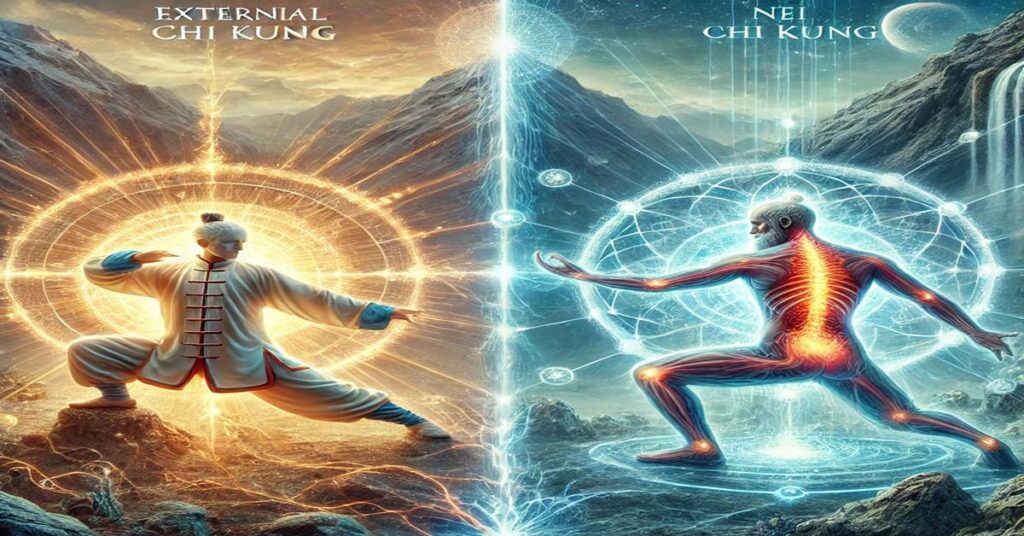
- Chi Kung (External): This is the more common practice, focusing on the body’s external energy channels. Practitioners work on one technique at a time, energizing individual channels. The focus is often on specific areas of the body. Which can lead to a more targeted approach to healing or health improvement.
- Nei Kung (Internal): In contrast, nei kung works from the inside out. Starting with the core energy at the center of the body and expanding outward. Nei kung aims to activate and synchronize the body’s entire energy system, rather than focusing on isolated channels. This comprehensive approach allows the practitioner’s chi to flow in unison, functioning as a cohesive, powerful system. Although you should beware of the dangers of this powerful system…
Master Gray emphasized that nei kung is a more advanced and integrated system. Combining strength, flexibility, energy cultivation, and meditation all at once. The result is a holistic practice that develops superior health, physical prowess, and spiritual depth.
The Practice of Nei Kung
Nei kung differs significantly from chi kung in terms of practice and goals. In chi kung, each technique typically focuses on one energy line or aspect of the body. Nei Kung, however, works on multiple energy flows simultaneously. As practitioners progress, they layer learned techniques, creating a synergistic effect that accelerates both physical and energetic development. This layered approach makes Nei Kung more efficient and powerful in achieving rapid results.
In the Tien Shan system, practitioners aim for energy to permeate to the bone marrow and the spine. This level of energy cultivation is considered vital for long-term health, vitality, and physical strength.
Master Gray emphasized that nei kung is especially effective for individuals seeking both superior health and enhanced physical abilities. Making it a valuable practice for martial artists, healers, and spiritual seekers alike.
Breath and Energy Movement
A key difference between chi kung and nei kung lies in the use of breath:
- Chi Kung: Most chi kung practices use physical breath to activate chi. Breath awareness and control are central to moving energy through the body’s channels.
- Nei Kung: In nei kung, movement and posture alone are used to manipulate chi. The energy flow is independent of the breath, meaning the practitioner can control and move energy regardless of their breathing pattern. This distinction allows nei kung practitioners to work at a deeper energetic level, purely focused on internal awareness.
The Path to Formlessness
One of the most profound goals of nei kung, according to Master Gray, is the cultivation of formlessness. In the early stages of practice, forms (structured movements or techniques) are essential for learning and building a foundation. However, as the practitioner progresses, the goal is to transcend the forms and achieve formlessness. A state in which the internal essence of the practice is fully realized, and the external scaffolding of form is no longer needed.
This journey from form to formlessness is a fundamental principle of Taoist philosophy. It is also a key goal in Tai Chi Chuan. Another internal martial art, which teaches that mastery of the forms ultimately leads to their dissolution, allowing the practitioner to move with pure energy and awareness.
Healing and Health
Both chi kung and nei kung offer remarkable health benefits, but their approaches differ:
- Chi Kung for Healing: External chi kung often targets specific problems with specific techniques. If a person has an imbalance or illness in one part of their system, chi kung can provide a focused solution. This makes chi kung an excellent practice for addressing particular health issues.
- Nei Kung for Overall Health: In contrast, nei kung focuses on energizing and balancing the entire system. By working holistically, it promotes superior health and longevity. Rather than targeting specific issues, nei kung enhances the body’s overall vitality. Leading to the resolution of health problems as a natural byproduct of the increased energy flow.
Power and Efficiency
One of the hallmarks of Tien Shan Chi Kung, as described by Master Gray, is its power orientation. Tien Shan Chi Kung is designed to cultivate chi power rapidly. Making it an efficient and effective system for both healing and energy cultivation. Before a practitioner can generate substantial chi power, however, they must first heal themselves. An area where Tien Shan Chi Kung excels.
Master Gray noted that this system is uniquely efficient because it integrates multiple aspects of training.—Strength, flexibility, energy cultivation, and meditation—into a single practice. This comprehensive approach accelerates the practitioner’s progress, allowing them to achieve results that would take much longer with more fragmented training systems.
Tien Shan Chi Kung: Unlocking the Depths of Nei Kung for Superior Health and Spiritual Power
Master Steve Gray’s teachings on Tien Shan Chi Kung highlight the profound depth of nei kung practice and its superiority in cultivating holistic health, vitality, and spiritual power. By working from the inside out, nei kung practitioners synchronize their energy flows, developing a unified system that enhances both physical prowess and spiritual growth. The journey toward formlessness—wherein the practitioner transcends structured forms to embody the essence of the practice—is the ultimate goal, aligning with Taoist principles of inner cultivation and harmony.
While chi kung offers specific techniques for healing and energy work, nei kung’s comprehensive, power-oriented approach leads to faster progress, deeper energy cultivation, and a greater ability to manifest chi power. For those seeking both superior health and a high level of physical and energetic mastery, Tien Shan Chi Kung provides a rare and powerful path to follow.